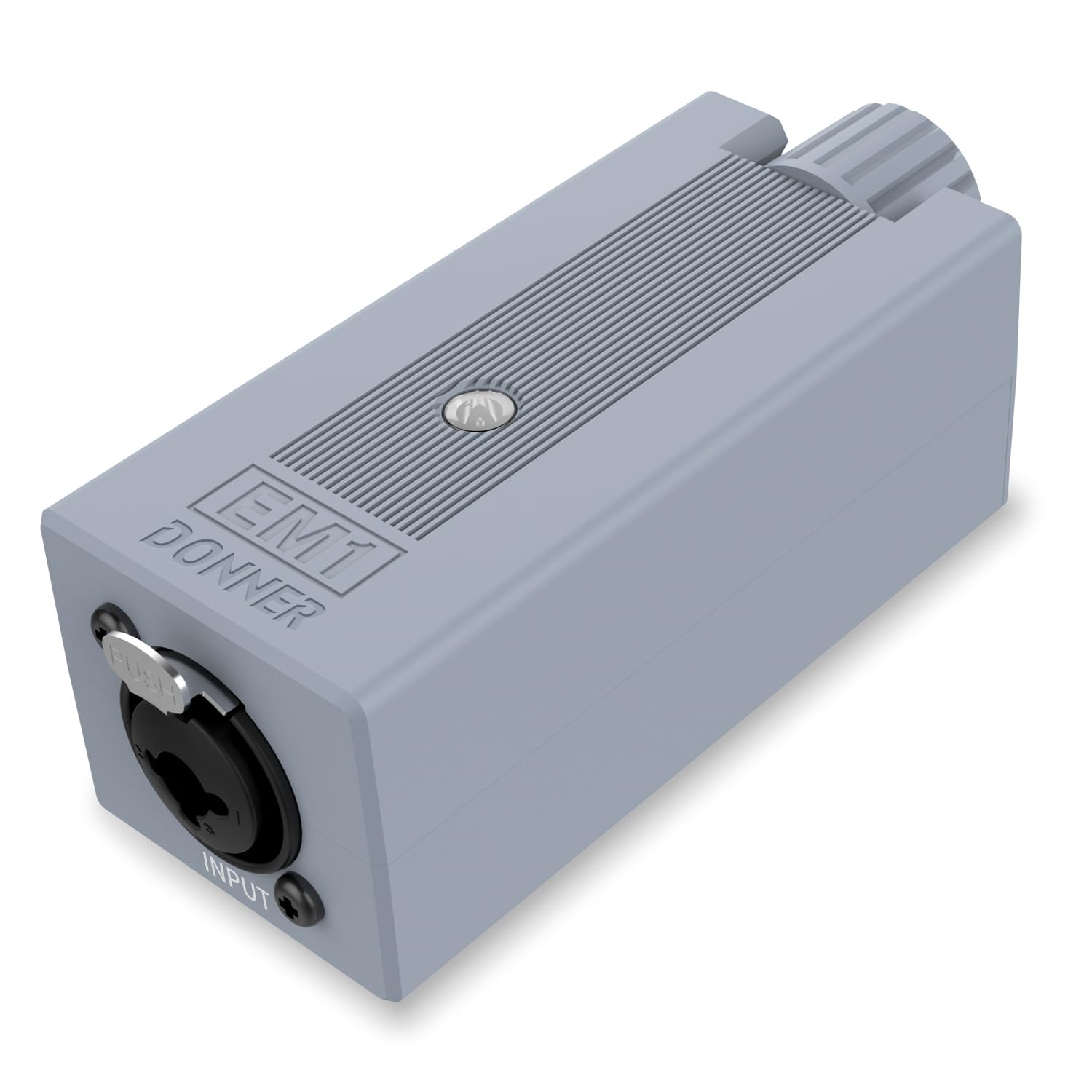
The Donner EM1 is a rechargeable personal headphone amplifier designed to put an in-ear monitor feed within reach while you play or perform.
This Donner EM1 review looks at its portable format, connection choices, and practical tradeoffs for musicians who need a simple personal monitoring setup.
Donner EM1 Review Summary
The quick verdict
800+ ratings
Read Amazon ReviewsDonner EM1
A compact rechargeable headphone amp for musicians who need a belt-pack personal monitor with XLR or TRS input and a mono or stereo source option.
- XLR and TRS input connectors, with a locking mechanism.
- 3.5 mm output jack for headphones or earphones.
- Mono/stereo source switch for adapting to the cable and source connection.
- Rechargeable Li-ion battery rated for up to 12 hours of operation.

Pros
- Combines XLR and TRS input options in a small personal monitoring unit.
- A belt-pack clip makes it easier to keep the amp close while moving.
Consider before buying
- It does not support microphones, so a mic cannot serve as the direct input for amplification.
- The source, cable, and mono/stereo setting need to be compatible for the intended monitoring setup.
Read the full review summary
The EM1 combines XLR and TRS inputs, a 3.5 mm headphone output, a mono/stereo source switch, and a rechargeable battery in a compact metal unit with a belt clip.
That combination suits players who want to connect a monitor feed, control their own listening level, and move around without carrying a larger headphone amp.
Its strongest fit is a musician whose setup already provides a suitable headphone-level or monitor feed and who wants a small, personal listening device.
The product description specifies that it does not support microphones, so buyers should plan on receiving audio from a separate source rather than plugging in a mic and expecting the EM1 to amplify it.
The buying factors
Donner EM1 Scorecard
Editorial scores reflect listed features and buyer fit; they are not laboratory measurements or customer ratings.
Portability
The compact design and metallic belt-pack clip are tailored to carrying the amp during practice or performance.
Input flexibility
XLR and TRS input connectors accommodate two common connection formats, with a locking mechanism noted for the input.
Source configuration
A mono/stereo switch adds useful flexibility, though the correct choice depends on the source and cable connection.
Battery convenience
The rechargeable Li-ion battery is specified to run for up to 12 hours, with power and charging indicators.
Monitoring focus
It is purpose-built for personal in-ear monitoring and headphone listening rather than serving as a microphone amplifier.
Setup clarity
The controls and connection types appear straightforward, but buyers need to confirm their source signal and cabling match the intended setup.
Key Features and Specifications of Donner EM1
- XLR and TRS input connectors, with a locking mechanism.
- 3.5 mm output jack for headphones or earphones.
- Mono/stereo source switch for adapting to the cable and source connection.
- Rechargeable Li-ion battery rated for up to 12 hours of operation.
- LED indicators for power and battery charging control.
- Compact metallic housing with a belt-pack clip for carrying.
- Designed as a personal in-ear monitor amplifier; microphone use is not supported.
Pros and Cons of Donner EM1
Pros
- Combines XLR and TRS input options in a small personal monitoring unit.
- A belt-pack clip makes it easier to keep the amp close while moving.
- Rechargeable operation avoids relying on a disposable battery during routine use.
- The mono/stereo switch can accommodate different source and cable configurations.
Consider before buying
- It does not support microphones, so a mic cannot serve as the direct input for amplification.
- The source, cable, and mono/stereo setting need to be compatible for the intended monitoring setup.
- Its personal headphone-monitoring role may be too specialized for buyers seeking a general-purpose desktop headphone system.
Who Should Buy Donner EM1?
Good fit
Consider the Donner EM1 if you need a portable amp for personal in-ear monitoring and your mixer, instrument rig, or other audio source can provide a compatible feed.
Having both XLR and TRS input formats gives you options when planning a rig, while the 3.5 mm output connects the listening device you intend to use.
The belt clip and rechargeable battery are useful for musicians who want the amp on their person rather than on a nearby table.
The up-to-12-hour battery specification may cover extended sessions, but actual runtime can depend on use; check the charge indicators and plan charging around your schedule.
Before buying, map the signal path: identify the source output, select the right cable, and confirm whether the feed should be mono or stereo.
That small check can prevent a mismatch and makes clear whether this focused monitor amp fits your setup.
Who should skip it
Skip this model if you need to connect and amplify a microphone directly; microphone support is not part of its described function.
Also look elsewhere if you need a broad desktop headphone system with features beyond a compact personal monitor amp.
How the Donner EM1 Fits a Personal Monitoring Rig
Inputs and signal planning
XLR and TRS inputs give the EM1 two connection formats, while the locking mechanism is a practical detail for a cable connected to a belt-worn device. Compatibility still depends on the output available from the source.
Check the source connector and signal routing before choosing a cable, especially if your setup has separate monitor and main outputs.
Choosing mono or stereo
The mono/stereo switch lets the user set the unit according to the cable connection and source. This matters when a rig's monitor feed is mono but the listening setup is stereo, or vice versa.
Confirm the intended channel arrangement at the source and use the setting that matches it; the switch alone does not determine what signal the source supplies.
Battery and on-person use
A rechargeable Li-ion battery rated for up to 12 hours makes the EM1 suitable for sessions where a nearby power outlet is inconvenient.
LED indicators for power and charging provide status cues, and the metal belt clip supports carrying the amp on a strap or belt.
For long rehearsals or events, charge it beforehand and leave room in your plan for runtime to vary.
Who benefits from a dedicated monitor amp
The product is centered on private headphone or in-ear listening, with a 3.5 mm output and a compact format. That focus can be useful when a musician wants personal access to a monitor feed.
It is a poor match for a mic-first setup, and buyers should ensure the rest of the rig supplies the audio feed the EM1 is meant to amplify.
Alternatives to Donner EM1
No alternative model is recommended here. Compare the input connections, monitoring format, and carrying needs that matter to your setup before choosing another option.
Is Donner EM1 Worth It?
The Donner EM1 is worth considering if you want a compact, rechargeable personal monitor amp with XLR or TRS input, a 3.5 mm output, and a belt-pack clip.
Its mono/stereo switch and up-to-12-hour battery rating add practical flexibility for a mobile rig.
Buy it when your source can provide a compatible feed and you need personal headphone monitoring.
Choose a different kind of amp if you need direct microphone support or a broader headphone system, and confirm the cable and channel setup before purchase.
Your review at a glance
800+ ratings
Read Amazon ReviewsDonner EM1
A compact rechargeable headphone amp for musicians who need a belt-pack personal monitor with XLR or TRS input and a mono or stereo source option.
- XLR and TRS input connectors, with a locking mechanism.
- 3.5 mm output jack for headphones or earphones.
- Mono/stereo source switch for adapting to the cable and source connection.
- Rechargeable Li-ion battery rated for up to 12 hours of operation.