This tp link tl sg105 switch review looks at a compact way to add wired connections where a router or existing network has run short of Ethernet ports.
The TL-SG105 pairs five Gigabit ports with a no-configuration setup, making it a practical fit for straightforward desktop or wall-mounted installations.
TP-Link TL-SG105 Review Summary
The quick verdict
130,000+ ratings
Read Amazon ReviewsTP-Link TL-SG105
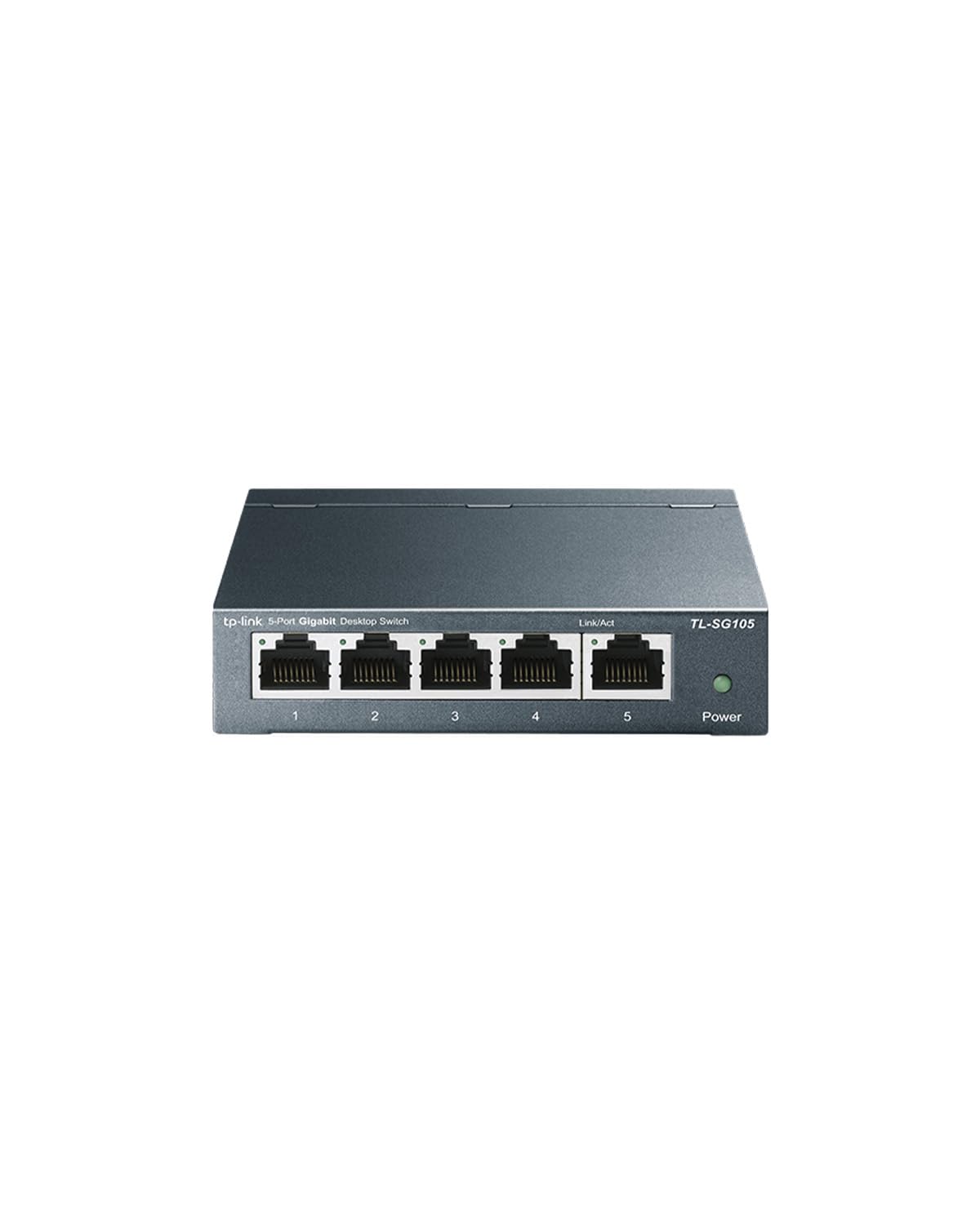
A compact, fanless wired switch for home offices or entertainment setups that need a few extra Gigabit Ethernet connections without manual configuration.
- Five 10/100/1000 Mbps RJ45 ports with auto negotiation and Auto MDI/MDIX.
- Unmanaged plug-and-play operation with no software installation or configuration required.
- Fanless design and metal casing, with desktop and wall-mounting options.
- Port-based 802.1p/DSCP QoS and IGMP Snooping for supported traffic-handling needs.

Pros
- Straightforward way to add up to five wired network connections.
- Gigabit-capable ports support common wired networking needs across compatible equipment.
Consider before buying
- Five ports may not leave enough connections for a growing network; one port will typically be used for the uplink to the existing network.
- It is not a PoE switch, so access points, cameras, or other devices that need Ethernet-delivered power require a separate power arrangement.
Read the full review summary
The TL-SG105 is a five-port unmanaged Ethernet switch with 10/100/1000 Mbps ports, auto negotiation, and Auto MDI/MDIX. Connect it to an existing network and attach wired devices; its plug-and-play design requires no software installation or configuration.
A fanless metal case and desktop or wall-mounting options support placement in a workspace or shared equipment area.
Its appeal is focused: expand a wired network without adding a managed-switch setup process.
The listed QoS functions and IGMP Snooping offer traffic-handling options for compatible voice, video, or multicast environments, while the five-port limit and lack of PoE in the product title define important boundaries.
It suits buyers who need a small number of ordinary Ethernet connections and do not need the switch to power connected devices.
The buying factors
TP-Link TL-SG105 Scorecard
Editorial scores reflect listed features and buyer fit; they are not laboratory measurements or customer ratings.
Port capacity
Five Gigabit Ethernet ports add several wired connections, though the total may be limiting in a larger setup.
Gigabit connectivity
All five RJ45 ports support 10/100/1000 Mbps with auto negotiation.
Setup simplicity
Plug-and-play operation avoids software installation and manual configuration.
Traffic controls
Port-based 802.1p/DSCP QoS and IGMP Snooping add useful options for suitable network traffic.
Placement flexibility
The metal case is designed for desktop or wall mounting, and fanless operation avoids fan noise.
Power and device needs
It adds Ethernet connectivity but does not provide PoE, so powered devices need another power source.
Key Features and Specifications of TP-Link TL-SG105
- Five 10/100/1000 Mbps RJ45 ports with auto negotiation and Auto MDI/MDIX.
- Unmanaged plug-and-play operation with no software installation or configuration required.
- Fanless design and metal casing, with desktop and wall-mounting options.
- Port-based 802.1p/DSCP QoS and IGMP Snooping for supported traffic-handling needs.
- IEEE 802.3X flow control is included.
- The product title identifies this model as non-PoE; the supplied dimensions are approximately 3.94 × 3.85 × 0.98 inches.
Pros and Cons of TP-Link TL-SG105
Pros
- Straightforward way to add up to five wired network connections.
- Gigabit-capable ports support common wired networking needs across compatible equipment.
- No software installation or manual configuration is needed for basic setup.
- Fanless metal design offers quiet operation and flexible desktop or wall placement.
Consider before buying
- Five ports may not leave enough connections for a growing network; one port will typically be used for the uplink to the existing network.
- It is not a PoE switch, so access points, cameras, or other devices that need Ethernet-delivered power require a separate power arrangement.
- The unmanaged design is aimed at simple expansion rather than hands-on network configuration; check whether your setup requires specific controls before choosing it.
Who Should Buy TP-Link TL-SG105?
Good fit
Consider the TL-SG105 if your router or existing switch lacks enough Ethernet ports and you want to connect a handful of wired devices with minimal setup.
The five Gigabit ports, automatic negotiation, and Auto MDI/MDIX make it a sensible option for mixed compatible network equipment where you want a small, straightforward expansion point.
Its fanless metal construction is a useful fit for a desk or a wall-mounted location where fan noise would be unwelcome.
QoS and IGMP Snooping may also be relevant if your network uses compatible voice, video, or multicast traffic; confirm that these functions align with the requirements of your equipment and network.
Before buying, count the connections you need, including the link back to your router or existing switch. If any attached device must receive power over Ethernet, plan for a separate power source or a PoE-capable solution.
Who should skip it
Look elsewhere if you need the switch itself to power PoE devices, or if your installation needs more than the available ports after accounting for its uplink.
If you need deliberate control over network configuration, first check that an unmanaged plug-and-play switch offers the management options your setup requires.
How the TP-Link TL-SG105 Fits a Small Wired Network
Port count and practical capacity
Five ports create a modest expansion point rather than a large network hub.
When one connection links the switch to a router or upstream switch, the remaining ports serve attached devices, so count the total connections you need before settling on this size.
Gigabit ports and automatic negotiation
Each RJ45 port supports 10/100/1000 Mbps and automatically negotiates with connected equipment. This reduces the need to match settings manually, while the actual link rate depends on the connected devices and the rest of the network path.
Unmanaged setup and traffic features
No software or configuration is required for basic plug-and-play use.
The listed 802.1p/DSCP QoS and IGMP Snooping features add traffic-handling functions, but buyers with specialized network policies should verify that the unmanaged design and these controls meet their particular requirements.
Physical installation and power planning
A fanless metal enclosure can suit quiet work areas, and desktop or wall mounting gives placement flexibility.
Since this is identified as a non-PoE model, plan separate power for devices that rely on Ethernet for both data and power.
Alternatives to TP-Link TL-SG105
No alternative model is recommended here. Compare the port count, power needs, and management features that matter to your setup before choosing another switch.
Is TP-Link TL-SG105 Worth It?
The TP-Link TL-SG105 is worth considering when you need a small number of additional wired Gigabit connections and want simple installation.
Its five-port capacity, fanless metal design, mounting flexibility, and basic traffic features cover a useful set of everyday needs.
Choose it only after checking your port count and device power requirements. The non-PoE design and unmanaged approach make it a focused solution for straightforward network expansion, not a fit for every installation.
Your review at a glance
130,000+ ratings
Read Amazon ReviewsTP-Link TL-SG105
A compact, fanless wired switch for home offices or entertainment setups that need a few extra Gigabit Ethernet connections without manual configuration.
- Five 10/100/1000 Mbps RJ45 ports with auto negotiation and Auto MDI/MDIX.
- Unmanaged plug-and-play operation with no software installation or configuration required.
- Fanless design and metal casing, with desktop and wall-mounting options.
- Port-based 802.1p/DSCP QoS and IGMP Snooping for supported traffic-handling needs.